Reflexology is several thousand years old. Evidence of practices similar to reflexology appears in ancient Egypt. A well-known tomb painting from around 2330 BCE shows people working on hands and feet, suggesting early forms of pressure therapy. Similar ideas also existed in ancient China and India, where foot and hand massage were linked to health and energy flow.
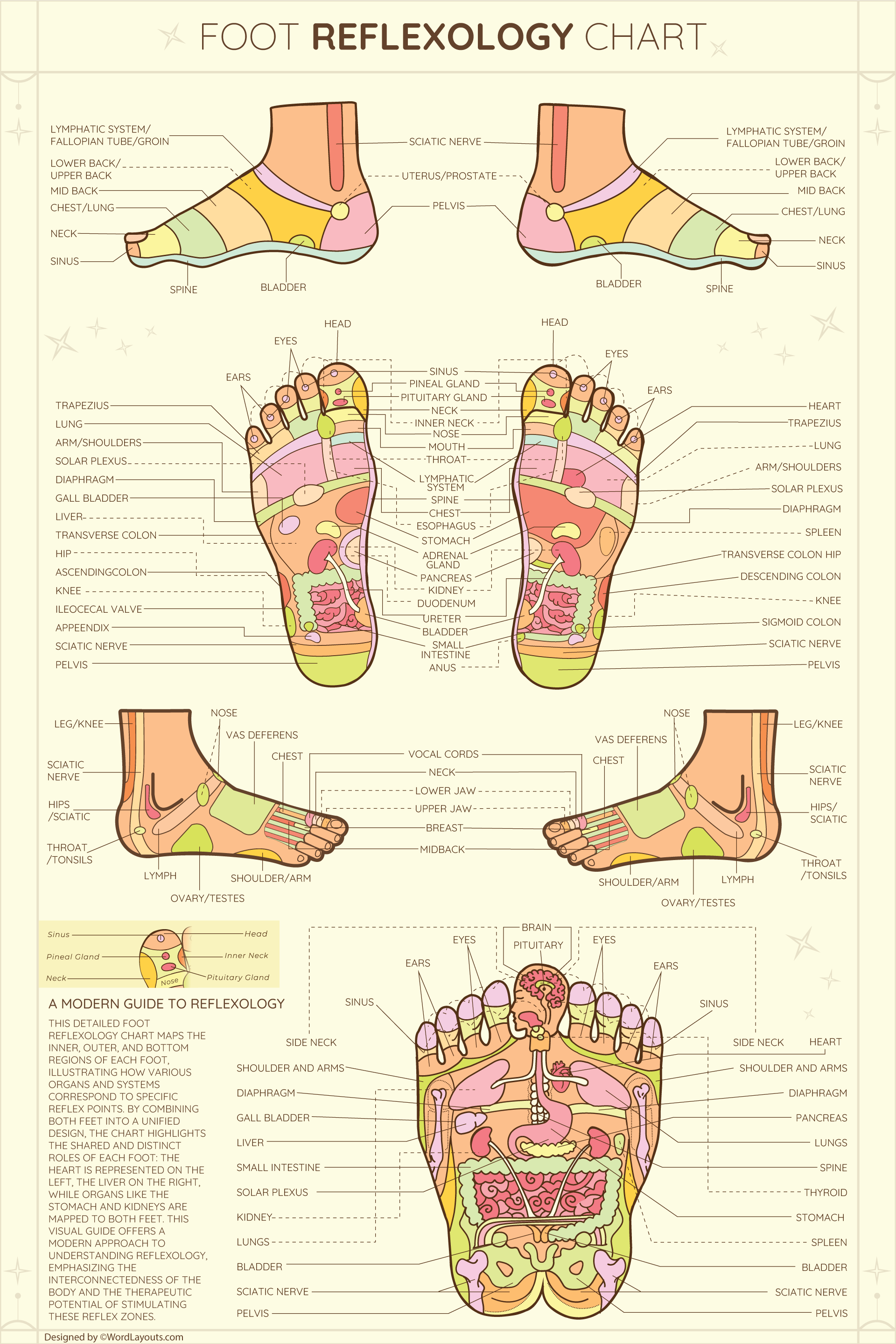
Modern reflexology (about 100–125 years old): the form of reflexology practiced today was developed in the early 20th century. In the United States, Dr. William Fitzgerald introduced “zone therapy” around 1915, and later Eunice Ingham refined it into modern reflexology by mapping the feet to specific organs and body systems. Practitioners apply gentle to firm pressure to these areas with the goal of promoting relaxation and supporting overall well-being. Areas of the toes are often associated with the head and neck, while the arch of the foot is linked to internal organs (please see below the Foot Reflexology Chart).
In reflexology, stimulating these points or areas stimulates healing and improved function in the corresponding organs or systems of organs. The practice works on the principle that the body is interconnected, and applying pressure to specific reflex points activates the body’s natural healing responses. By encouraging balance, circulation, and nerve communication, reflexology supports overall health and well-being.